






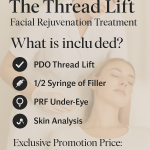




Nasolabial folds, often called smile lines or laugh lines, are among the earliest signs of facial aging, caused by volume loss, collagen decline, and natural skin laxity. PDO threads have become a popular non‑surgical option for softening these creases and restoring a more lifted, youthful appearance. Using dissolvable sutures placed beneath the skin, PDO threads stimulate collagen production while providing immediate structural support. But how effective are they specifically for treating nasolabial folds? In this article, we explore how PDO threads work, what results you can expect, and whether this treatment is the right choice for reducing deep smile lines.
How PDO Threads Work for Nasolabial Folds
PDO threads lift and tighten the skin by being strategically inserted beneath the surface. Here’s how the process works step by step:
- Collagen Stimulation: PDO threads trigger natural collagen production around the treated area, improving elasticity and firmness.
- Structural Support: The threads create an internal scaffold that holds sagging skin in place for an immediate lifting effect.
- Gradual Improvement: As the threads dissolve over weeks, newly formed collagen maintains the improved contour.
- Minimally Invasive Approach: No surgery or major downtime; the treatment uses fine needles for thread placement.
- Natural Results: Unlike fillers, the outcome looks subtle and harmonizes with facial expressions.
- Longevity: Enhancement continues even after the threads dissolve, leaving smoother, refreshed folds.
Types of PDO Threads Used for Smile Lines
PDO threads come in various shapes and materials, each serving a different purpose depending on the severity of the folds. Monofilament threads (Mono threads) are smooth and primarily used to stimulate collagen without producing major lifting. Cog threads, equipped with tiny barbs, anchor into the skin to achieve a more noticeable lifting effect, perfect for moderate to deep nasolabial folds. Screw threads are twisted to add volume and increase collagen stimulation, ideal for fuller facial areas. The practitioner may choose a combination of thread types based on your skin laxity and cosmetic goals. Selecting the right type of PDO thread ensures balanced outcomes and a natural rejuvenation around the smile line area.
How Long the Results Typically Last
The longevity of PDO thread results depends on your skin condition, type of thread, and post‑treatment care. On average, results remain visible for 12 to 18 months. Collagen continues to build even after the threads dissolve, extending the overall smoothing and tightening effect. Patients with healthy lifestyles, balanced skincare routines, and proper hydration often experience longer‑lasting improvements. It’s recommended to schedule maintenance sessions every 12-15 months to preserve collagen support. Compared to fillers, PDO threads provide structural lift rather than simple volume, which explains their enduring results. Consistency in aftercare, avoiding excessive facial movements or sleeping on the treated area, helps maximize how long the rejuvenation lasts.
Ideal Candidates for Nasolabial Fold Threading
PDO thread treatment suits individuals who notice early to moderate sagging around the mouth or cheeks but wish to avoid invasive surgery. Ideal candidates are typically in their late 20s to early 40s, with good overall health and mild skin laxity. Those with realistic expectations and a desire for gradual improvement rather than instant transformation see the best outcomes. It’s also suitable for people who cannot tolerate injectable fillers or want a more natural enhancement. However, patients with severe folds, thick skin, or poor wound healing may need alternative options or combination therapy. Consulting with an experienced practitioner ensures this procedure aligns with your facial anatomy and aesthetic needs.
Benefits of Using PDO Threads for Deep Smile Lines
PDO threads offer a range of effective benefits when addressing nasolabial folds. First, they provide instant lifting, correcting sagging without surgery. The threads physically support the skin and stimulate collagen, improving elasticity and smoothness over time. Second, the results look natural, avoiding the “overfilled” appearance that sometimes comes with excessive dermal filler use.
Additionally, PDO threads are versatile, they can treat multiple facial areas, often combined with other rejuvenation techniques like PRP or laser therapy. Recovery is minimal; most patients resume normal activity within a day or two. Another major advantage is customization: practitioners can adjust thread placement and depth according to your facial shape and degree of skin laxity. Long‑term, collagen production continues for months, maintaining a youthful and refreshed look. Overall, PDO threads balance subtle enhancement and structural support, offering one of the safest and most effective non‑surgical methods for deep smile lines.
Read more: PDO Threads Lift
PDO Threads vs Dermal Fillers: Which Is Better for Nasolabial Folds?
PDO threads and dermal fillers both aim to rejuvenate nasolabial folds but work in distinct ways. Fillers restore lost volume by injecting hyaluronic acid beneath the skin, visibly plumping up wrinkles. The results appear instantly but typically last 6 to 12 months. PDO threads, on the other hand, physically lift sagging tissues while stimulating collagen, providing gradual and structural improvement that lasts 12 to 18 months.
When folds are primarily caused by volume loss, fillers may be more effective; when the issue is skin laxity and sagging, PDO threads deliver superior lifting. Combining both treatments can yield optimal results, fillers for volume and threads for tightening. PDO threads also avoid the risk of overfilling or asymmetry sometimes seen with extensive filler use. In summary, while fillers offer immediate volume correction, PDO threads deliver long‑term collagen support and contour enhancement, making them ideal for those seeking natural, durable rejuvenation.
Potential Risks and Side Effects You Should Know
Although PDO threads are considered safe and minimally invasive, understanding possible risks is essential before undergoing the procedure. Mild swelling, bruising, or tenderness in the treated area are the most common side effects and usually resolve within a few days. Rare complications include thread migration, infection, or asymmetrical results if improperly placed. Choosing a trained and experienced practitioner greatly reduces these risks. Occasionally, patients may feel slight tightness or see small irregularities under the skin, which typically smooth out as inflammation decreases. To minimize side effects, follow post‑procedure instructions carefully: avoid facial massages, strenuous exercise, and sleeping face‑down for several days. Allergic reactions are extremely rare since PDO material is biocompatible and dissolves naturally. When performed correctly, PDO threads have excellent safety outcomes and provide reliable long‑term skin tightening with minimal downtime.
What to Expect During the PDO Thread Procedure (Table Section)
| Step | Description | Duration | Feeling / Sensation |
| Consultation | The practitioner examines your nasolabial folds, discusses goals, and selects thread types. | 15-20 min | Comfortable |
| Preparation | Skin is cleansed and marked for precise placement; local anesthesia applied. | 10 min | Mild numbness |
| Thread Insertion | Threads are carefully inserted using fine needles or cannulas. | 20-30 min | Slight pressure only |
| Adjustment | Threads are positioned to create optimal lift and symmetry. | 10 min | Gentle pulling |
| Aftercare Guidance | Practitioner reviews care instructions and what to expect post‑treatment. | 5-10 min | Relaxed and normal |
Cost of PDO Threads for Nasolabial Folds: What Factors Affect Pricing?
The cost of PDO threads for treating nasolabial folds can vary significantly depending on several clinical and procedural factors. On average, patients can expect pricing to range from moderate to premium levels because nasolabial folds often require multiple threads and precise technique. One of the biggest determinants is the type of PDO thread used. Cog threads, which provide a stronger lifting effect, are generally more expensive than mono or screw threads due to their structure and the level of correction they offer. The quantity of threads also plays a major role, as deeper folds may require additional support to achieve natural, symmetric results.
Another key factor is the experience and reputation of the practitioner. Highly trained aesthetic specialists, particularly those with extensive knowledge of facial anatomy, may charge more but offer safer, more predictable outcomes. Geographic location also influences cost, clinics in major metropolitan areas typically have higher prices due to demand and operational expenses.
The complexity of your case contributes to overall pricing as well. Patients with significant skin laxity, asymmetry, or volume loss may need combination treatments, such as pairing PDO threads with fillers or collagen‑stimulating therapies, which increases total investment. Similarly, the use of premium‑quality threads produced by reputable manufacturers may elevate the price but ensure better longevity and safety. Additional considerations include clinic technology, the quality of tools used, post‑treatment care packages, and whether follow‑up appointments are included. Some clinics offer maintenance programs or bundled pricing for multi‑area rejuvenation, which can affect the total cost.
Ultimately, the best way to understand your individualized pricing is through a professional consultation. A skilled practitioner will evaluate your skin condition, determine the number and type of threads needed, and create a tailored treatment plan that aligns with your goals and budget.
Recovery and Aftercare Tips After PDO Threads for Nasolabial Folds
Recovery after PDO threads for nasolabial folds is generally quick, but proper aftercare is essential to protect the threads and optimize collagen stimulation. In the first 24-48 hours, mild swelling, tenderness, or bruising is normal. Patients are advised to avoid touching, rubbing, or massaging the treated area to prevent displacement of the threads. Sleeping on your back with the head elevated helps minimize swelling and reduces pressure on the mid‑face.
For approximately one week, it’s recommended to avoid exaggerated facial movements, wide yawning, or dental procedures where the mouth is kept open for prolonged periods. Intense exercise, saunas, and very hot showers should also be limited, as increased circulation and heat can aggravate swelling. Alcohol and smoking may impair healing and collagen formation, so limiting or avoiding them is beneficial.
A soft diet may be suggested for a few days to reduce strain on the perioral area. If needed, over‑the‑counter painkillers (excluding blood‑thinning medications unless prescribed) can be used. Any signs of infection, such as persistent redness, warmth, or discharge, should be reported immediately. Adhering to these guidelines helps ensure stable thread positioning, smoother contours, and more predictable long‑term results.
Are PDO Threads Worth It for Treating Nasolabial Folds?
Whether PDO threads are worth it for treating nasolabial folds largely depends on the severity of the folds, skin quality, and the patient’s aesthetic goals. Clinically, PDO thread lifts work by providing mechanical lifting and biostimulation. Once inserted beneath the skin, the threads create a subtle repositioning of sagging mid‑face tissues while simultaneously stimulating fibroblasts to produce new collagen. This dual action can soften the appearance of nasolabial folds and improve overall skin firmness.
DO threads tend to be most effective for mild to moderate nasolabial folds, particularly when the folds are caused by early tissue descent rather than deep structural volume loss. In these cases, lifting the cheek and mid‑face area can significantly reduce the depth of the folds. However, when folds are very deep or accompanied by significant fat loss, combining PDO threads with dermal fillers or other rejuvenation treatments often produces better outcomes.
Another factor that makes PDO threads appealing is their minimally invasive nature. The procedure is performed under local anesthesia, requires minimal downtime, and avoids the risks and recovery associated with surgical facelifts. Results typically last 12 to 18 months, depending on the type of threads used and individual collagen response.
For patients seeking a subtle, natural improvement without surgery, PDO threads can be a valuable option for improving nasolabial folds when performed by an experienced practitioner.
Final Thoughts: Are PDO Threads Effective for Nasolabial Fold Reduction?
PDO thread lifting has emerged as a valuable minimally invasive option for improving the appearance of nasolabial folds, particularly in patients with early to moderate signs of facial aging. By combining a mild mechanical lifting effect with collagen stimulation, PDO threads help reposition sagging mid‑face tissues while gradually improving skin firmness and elasticity. This dual mechanism makes them especially useful when nasolabial folds are primarily caused by tissue descent rather than deep volume depletion.
However, it is important to understand that PDO threads are not a universal solution for all types of nasolabial folds. In cases where folds are very deep or associated with significant fat loss, additional treatments such as dermal fillers, energy‑based skin tightening, or combination protocols may be recommended to achieve optimal results. A thorough facial assessment by a qualified practitioner is essential to determine the most appropriate treatment plan.
One of the major advantages of PDO threads is the balance they offer between effectiveness and minimal downtime. The procedure typically takes less than an hour, recovery is relatively quick, and results can last 12 to 18 months as collagen remodeling continues.
Overall, PDO threads can be an effective option for reducing nasolabial folds in properly selected patients. When performed by an experienced professional and combined with appropriate aftercare, the treatment can provide natural‑looking rejuvenation and improved facial harmony without the need for surgery.
FAQ
- What are PDO threads and how do they work for nasolabial folds?
PDO (Polydioxanone) threads are dissolvable sutures inserted beneath the skin to lift and tighten sagging tissues. For nasolabial folds, they create an internal scaffold that repositions the skin while stimulating the body’s natural collagen production, improving skin elasticity and firmness over time.
- How long do the results of PDO threads for nasolabial folds last?
The results typically last between 12 to 18 months, depending on individual factors like skin condition, the type of threads used, and adherence to aftercare instructions. Collagen production continues even after the threads dissolve, extending the beneficial effects.
- Is the PDO thread procedure painful?
The procedure is generally well‑tolerated. Local anesthesia is applied to the treatment area, minimizing discomfort during thread insertion. Patients may feel slight pressure or a pulling sensation but rarely experience significant pain.
- What is the recovery like after PDO threads for nasolabial folds?
Recovery is usually quick. Most patients experience mild swelling, bruising, or tenderness for a few days. It’s recommended to avoid strenuous activity, facial massages, and sleeping on your side or stomach for about a week to ensure optimal healing and thread integration.
- Can PDO threads be combined with other treatments like dermal fillers?
Yes, PDO threads can often be combined with other aesthetic treatments, including dermal fillers. This approach is particularly effective for addressing complex concerns, where threads provide lift and collagen stimulation, and fillers restore lost volume, leading to comprehensive rejuvenation.
- Are there any side effects or risks associated with PDO threads?
Common side effects are temporary and include mild swelling, bruising, and tenderness. Rare risks include infection, thread migration, or asymmetry. Choosing a qualified and experienced practitioner significantly reduces these risks.
- Who is an ideal candidate for PDO threads for nasolabial folds?
Ideal candidates are typically individuals with mild to moderate nasolabial folds and some skin laxity who are seeking a non‑surgical lifting option. Those with realistic expectations and good overall health are generally suitable. A consultation with a specialist can determine if it’s the right treatment for you.
Conclusion and Call to Action
PDO threads offer a compelling, minimally invasive solution for individuals seeking to diminish the appearance of nasolabial folds and achieve a more youthful facial contour. By lifting sagging tissues and stimulating natural collagen production, this treatment provides both immediate and long‑term benefits, with results typically lasting 12 to 18 months. While PDO threads are particularly effective for mild to moderate folds, their versatility allows for combination with other aesthetic treatments to address more profound concerns. If you’re considering a non‑surgical approach to rejuvenate your smile lines, consulting with an experienced aesthetic practitioner is the crucial first step. They can assess your unique facial anatomy, discuss your aesthetic goals, and determine if PDO threads are the right choice for you, ensuring a tailored and effective treatment plan.