










PDO Threads for Neck Lift
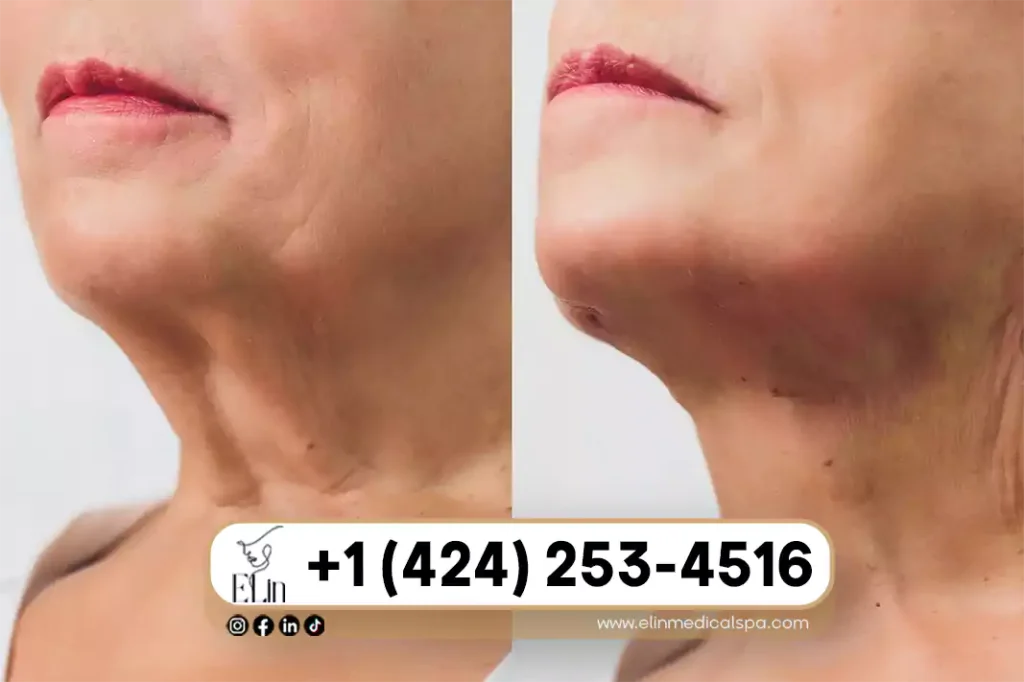
What Are PDO Threads and How Do They Work for Neck Lift?
Polydioxanone (PDO) threads are biodegradable sutures widely used in aesthetic medicine for minimally invasive skin lifting and rejuvenation procedures. Originally developed for surgical applications, PDO threads have been adapted in cosmetic dermatology to address age‑related skin laxity, particularly in delicate areas such as the neck. The neck often shows early signs of aging due to thinner skin, reduced collagen production, and repetitive muscle activity, making it an ideal candidate for non‑surgical lifting techniques.
During a PDO thread neck lift procedure, fine threads made of polydioxanone are inserted into the subdermal layer of the skin using a thin cannula or needle. Once positioned, these threads create a supportive scaffold that mechanically lifts and repositions sagging tissues. Certain thread designs, such as barbed or cog threads, anchor into the tissue and provide a more pronounced lifting effect, improving the definition of the jawline and cervical contour.
Beyond the immediate mechanical lift, PDO threads stimulate a biological response within the surrounding tissues. The presence of the threads triggers a controlled inflammatory process that promotes neocollagenesis, elastin production, and improved microcirculation. This collagen remodeling gradually enhances skin thickness, elasticity, and firmness over time, contributing to longer‑lasting rejuvenation even after the threads are naturally absorbed by the body.
PDO threads are fully biocompatible and typically dissolve within several months through hydrolysis, while the collagen network formed around them can maintain structural support for a longer period. As a result, PDO thread lifting has become a popular option for patients seeking subtle yet noticeable neck rejuvenation without the risks, downtime, or cost associated with surgical neck lift procedures.
Benefits of PDO Threads for Neck Lift
PDO thread lifting offers several advantages for individuals seeking neck rejuvenation without undergoing invasive surgery. Key benefits include:
- Minimally invasive treatment: The procedure is performed using fine needles or cannulas, eliminating the need for large incisions and reducing tissue trauma.
- Immediate lifting effect: Patients often notice an instant improvement in skin tightness and neck contour as the threads mechanically reposition sagging tissues.
- Collagen stimulation: PDO threads trigger neocollagenesis, encouraging the body to produce new collagen that gradually improves skin texture, firmness, and elasticity.
- Natural‑looking results: Because the treatment enhances the skin’s own regenerative processes, the outcome appears subtle and harmonious with the patient’s natural facial anatomy.
- Minimal downtime: Most patients can resume normal daily activities within a short period, making the procedure suitable for individuals with busy lifestyles.
- Improved neck contour and jawline definition: Strategic thread placement can enhance the cervicomental angle and provide better structural support for the lower face and neck.
- Safe and biocompatible material: PDO has a long history of safe use in medical sutures and is naturally absorbed by the body over time.
- Customizable treatment approach: Physicians can tailor the number, type, and placement of threads according to the patient’s anatomy and aesthetic goals.
Types of PDO Threads Used in Neck Lift Procedures
PDO thread neck lift procedures utilize different thread designs to address varying degrees of skin laxity, tissue descent, and structural support needs in the cervical region. Selecting the appropriate thread type is critical for achieving optimal aesthetic outcomes while maintaining natural movement and contour. The neck presents unique anatomical challenges, including thin dermal thickness, dynamic platysmal activity, and limited subcutaneous fat, all of which influence thread selection and placement strategy.
PDO threads differ in structure, tensile strength, and lifting capability. Some are designed primarily to stimulate collagen and improve skin texture, while others provide a stronger mechanical lift by anchoring into soft tissue. The choice depends on the severity of laxity, patient age, skin quality, and desired outcome. In many cases, combination techniques are employed to maximize both lifting and regenerative effects.
Understanding the properties of each thread type allows practitioners to customize treatment plans tailored to individual anatomy and aesthetic goals. Proper patient assessment, including evaluation of cervicomental angle, jawline definition, and degree of platysmal banding, further guides the selection process. Ultimately, using the correct PDO thread type enhances safety, efficacy, and longevity of results in non‑surgical neck rejuvenation.
Read more: PDO Threads Lift
Mono Threads for Neck Rejuvenation
Mono threads are smooth, single‑filament PDO sutures without barbs or cogs. They are primarily used to improve skin texture, elasticity, and mild laxity rather than to provide significant mechanical lifting. When inserted into the superficial dermis or subdermal layer of the neck, mono threads create a mesh‑like scaffold that stimulates fibroblast activity and collagen synthesis.
These threads are particularly suitable for patients with early signs of aging, fine lines, crepey skin, or mild skin thinning in the neck area. Because they do not anchor into tissue, their lifting effect is subtle; however, their biostimulatory impact can significantly enhance skin firmness and thickness over time.
Multiple mono threads are often placed in a cross‑hatch or linear pattern to maximize collagen induction and improve overall skin quality. They are commonly combined with other thread types or adjunctive treatments such as biostimulators or energy‑based devices to optimize outcomes. Mono threads are ideal for patients seeking gradual, natural‑looking rejuvenation with minimal downtime.
Cog Threads for Neck Lifting
Cog threads are barbed PDO sutures specifically engineered to provide mechanical lifting and tissue repositioning. Unlike smooth mono threads, cog threads contain tiny barbs along their length that anchor into the subcutaneous tissue once inserted. These barbs grip the surrounding structures, allowing the practitioner to elevate sagging skin and redefine the jawline and neck contour.
In neck lift procedures, cog threads are typically placed along vectors that counteract gravitational descent, improving the cervicomental angle and reducing the appearance of skin laxity. They are particularly effective in patients with moderate sagging who require more structural support than mono threads can provide.
In addition to the immediate lifting effect, cog threads also stimulate collagen production through controlled tissue response. Over time, this collagen remodeling reinforces the lifted position and enhances skin firmness. Proper placement technique and vector planning are essential to ensure symmetry, natural results, and long‑term stability in non‑surgical neck lifting.
Step‑by‑Step PDO Thread Neck Lift Procedure
A PDO thread neck lift begins with a comprehensive consultation and clinical assessment. The practitioner evaluates skin laxity, submental fullness, platysmal banding, and overall neck anatomy to determine candidacy and select appropriate thread types. Pre‑procedural photographs are typically taken for documentation and treatment planning.
On the day of the procedure, the treatment area is cleansed and disinfected, and local anesthesia is administered to ensure patient comfort. Entry points are carefully marked according to predetermined lifting vectors. Using a fine cannula or needle, the PDO threads are inserted into the subdermal plane following precise anatomical guidelines.
Once positioned, the threads are gently adjusted to achieve the desired lifting effect and tissue repositioning. Excess thread material is trimmed, and the entry sites require minimal or no suturing. The entire procedure usually takes less than an hour, depending on the number of threads used.
After treatment, patients receive post‑procedure instructions to minimize swelling and optimize results. Mild edema or bruising may occur but typically resolves within days, allowing a relatively quick return to daily activities.
PDO Threads vs Surgical Neck Lift: Key Differences
| Factor | PDO Thread Neck Lift (Non‑Surgical) | Surgical Neck Lift (Platysmaplasty / Cervicoplasty) |
| Invasiveness | Minimally invasive; no large incisions | Fully invasive surgical procedure with incisions |
| Anesthesia | Local anesthesia | General anesthesia or deep sedation |
| Recovery Time | 1-3 days of mild downtime | 2-3 weeks of significant downtime |
| Results | Subtle to moderate lifting; natural look | Dramatic and long‑lasting reshaping of the neck |
| Longevity | 12-24 months depending on threads and patient factors | 5-10+ years depending on aging and lifestyle |
| Scarring | No visible scars; entry points heal quickly | Small but permanent scars around ears or under chin |
| Ideal Candidates | Mild to moderate skin laxity | Moderate to severe laxity or excess skin |
| Risks | Minor bruising, swelling, temporary asymmetry | Hematoma, nerve injury, infection, prolonged swelling |
| Procedure Duration | 30-45 minutes | 1.5-3 hours |
| Procedure Duration | 30-45 minutes | 1.5-3 hours |
Results, Longevity, and Recovery After PDO Neck Lift
PDO thread neck lift provides both immediate and progressive improvements in neck contour and skin quality. Immediately after the procedure, patients often notice a subtle lifting effect as the threads mechanically reposition sagging tissues and support the underlying structures. This initial lift helps enhance the cervicomental angle and improve jawline definition. However, the full aesthetic benefits develop gradually over the following weeks as the body responds biologically to the presence of the threads.
PDO threads stimulate neocollagenesis, a process in which fibroblasts produce new collagen around the inserted threads. This collagen remodeling improves skin firmness, elasticity, and overall texture in the treated area. As a result, patients typically observe progressive tightening and rejuvenation of the neck over a period of two to three months after treatment.
The longevity of results varies depending on several factors, including the patient’s age, skin quality, lifestyle, and the type and number of threads used. In most cases, results can last between 12 and 24 months. Although the PDO threads themselves gradually dissolve through hydrolysis within several months, the collagen network formed during the healing process continues to provide structural support to the skin.
Recovery from a PDO neck lift is generally quick, with minimal disruption to daily activities. Most patients experience mild swelling, tenderness, or minor bruising, which usually resolves within a few days.
Expected Results Timeline After PDO Neck Lift
The results of a PDO thread neck lift evolve over time as both mechanical lifting and biological regeneration occur. Immediately after the procedure, patients typically notice an instant but subtle improvement in neck tightness and contour due to the repositioning of soft tissues. Mild swelling at this stage may temporarily obscure the final appearance.
Within the first one to two weeks, swelling and minor bruising gradually subside, allowing the early lifting effect to become more visible. During this period, the threads begin integrating with the surrounding tissue, providing additional structural support to the treated area.
Between four and eight weeks, collagen production significantly increases as part of the body’s natural healing response. This phase leads to gradual skin tightening, improved elasticity, and enhanced skin texture. Patients often notice progressive improvements in firmness and overall neck rejuvenation.
Optimal results are generally seen around two to three months after the procedure, when collagen remodeling has fully developed and the lifted contours appear more refined and natural.
Post‑Treatment Care and Recovery Tips
Proper post‑treatment care is essential for ensuring optimal results and minimizing potential complications following a PDO thread neck lift. Immediately after the procedure, patients are typically advised to avoid excessive neck movement, vigorous facial expressions, and strenuous physical activities for several days. These precautions help prevent displacement of the threads while the tissues begin to stabilize.
Sleeping position is also important during the early recovery phase. Patients are generally encouraged to sleep on their back with the head slightly elevated for about one week to reduce swelling and protect the treated area. Gentle skincare can usually be resumed within a short period, although aggressive massage or facial treatments should be avoided for at least two weeks.
It is common to experience mild swelling, tenderness, or small bruises around the insertion points. Applying cold compresses and following the physician’s recommendations can help manage these temporary effects. In most cases, these symptoms resolve within a few days.
Following all post‑procedure instructions and attending scheduled follow‑up appointments ensures proper healing and helps maintain the longevity of the treatment results.
FAQ
1. Are PDO threads safe for neck lifting procedures?
Yes, PDO threads are considered safe when performed by a trained and experienced practitioner. Polydioxanone has been used in surgical sutures for many years and is fully biocompatible. The material gradually dissolves in the body without causing significant adverse reactions, making it a reliable option for minimally invasive aesthetic treatments.
2. How long do the results of a PDO thread neck lift last?
The results typically last between 12 and 24 months. While the threads themselves dissolve within several months, the collagen stimulation they trigger continues to support the skin structure for a longer period.
3. Is the PDO thread neck lift procedure painful?
Most patients report minimal discomfort because the procedure is performed under local anesthesia. Mild soreness or tightness may occur after treatment, but it usually subsides within a few days.
4. Who is an ideal candidate for PDO thread neck lifting?
Ideal candidates are individuals with mild to moderate skin laxity in the neck who want noticeable improvement without undergoing surgery. Patients with severe excess skin may benefit more from surgical neck lift procedures.
5. How soon can normal activities be resumed after the procedure?
Most patients can return to normal daily activities within one to three days. However, strenuous exercise and excessive neck movement should be avoided for about one to two weeks.
6. Can PDO threads be combined with other aesthetic treatments?
Yes, PDO thread lifting is often combined with treatments such as dermal fillers, botulinum toxin, or energy‑based skin tightening procedures to enhance overall rejuvenation results.
A Modern Approach to Neck Rejuvenation
PDO thread lifting has emerged as an effective and minimally invasive solution for individuals seeking to improve neck contour and skin firmness without undergoing surgery. By combining an immediate mechanical lifting effect with long‑term collagen stimulation, this technique offers a balanced approach to neck rejuvenation. Patients can achieve noticeable yet natural‑looking improvements in skin tightness, jawline definition, and overall neck appearance with minimal downtime.
One of the key advantages of PDO thread lifting is its versatility. Different thread types and placement techniques allow practitioners to tailor the treatment according to each patient’s anatomical needs and aesthetic goals. Additionally, the procedure can be combined with other non‑surgical treatments to further enhance results and support long‑term skin health.
While the results are not as dramatic as surgical neck lifting, PDO threads provide a valuable alternative for patients with mild to moderate skin laxity who prefer less invasive options. With proper patient selection, expert technique, and appropriate aftercare, PDO thread neck lifting can deliver safe, natural, and satisfying rejuvenation outcomes.
Have a question about this treatment? Our Beverly Hills team will help you choose what fits your goals.