










PRF Hair Restoration in Beverly Hills: Can It Help with Hair Thinning?
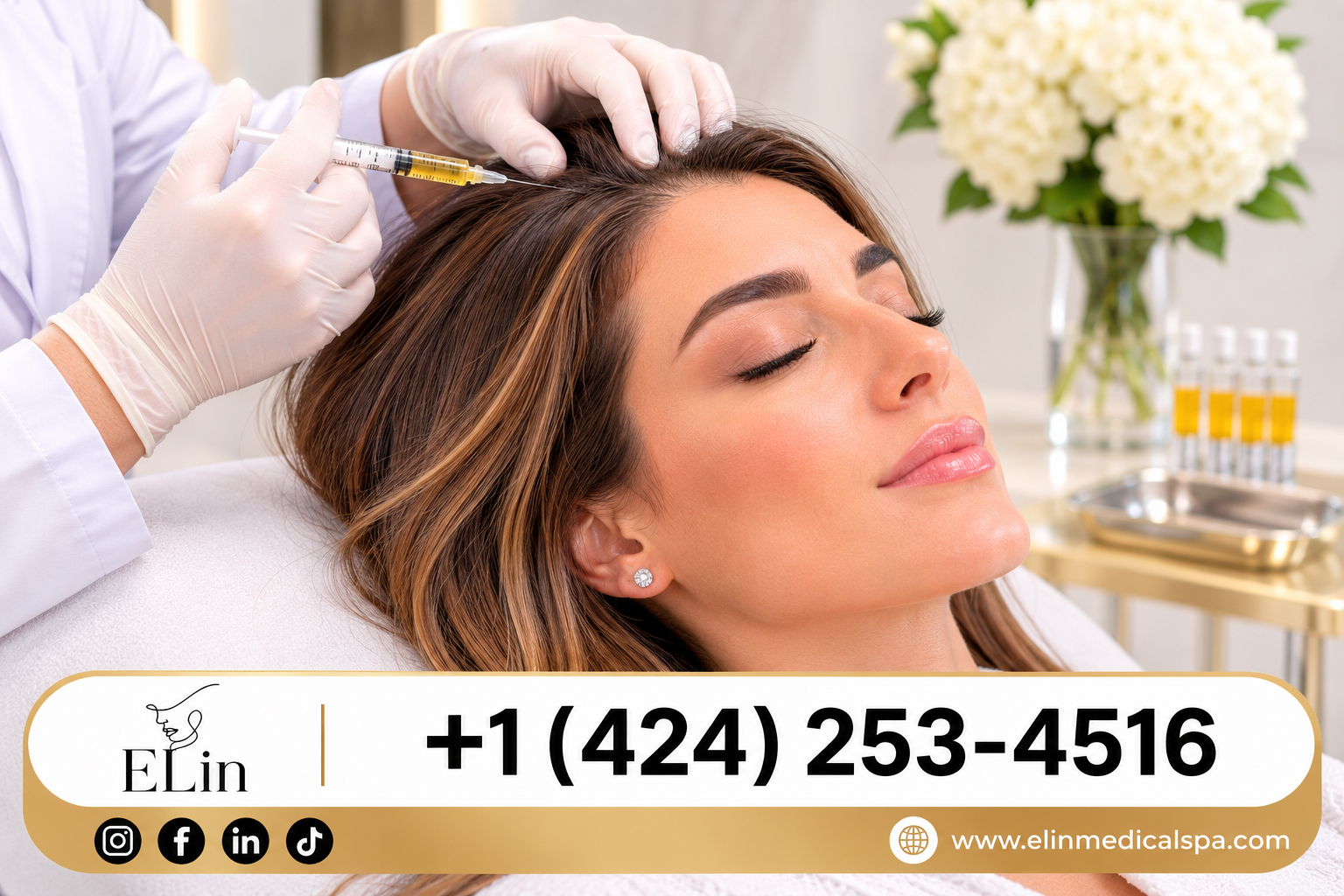
Platelet-rich fibrin, commonly called PRF, is an injectable treatment prepared from a small sample of your own blood. It contains platelets and a fibrin-based structure that may help deliver biological signaling molecules involved in tissue repair. Early clinical research suggests that PRF may benefit some people experiencing certain forms of hair thinning, but results are not guaranteed, and the evidence is still developing.
This guide explains three essential parts of the decision: how PRF works and what research suggests, who may be a suitable candidate and what treatment involves, and how to compare PRF with other hair-loss options while setting realistic expectations.
Quick Summary
- PRF is prepared from your own blood and contains platelets, fibrin, and biological signaling molecules.
- Early studies suggest injectable PRF may improve selected hair-density and hair-thickness measurements in some people with pattern hair loss.
- PRF is not a guaranteed cure for baldness and cannot reliably restore follicles that have been permanently lost.
- Results depend on the cause and severity of hair thinning, the treatment protocol, and individual factors.
- A proper assessment should consider medical history, scalp health, possible nutritional or hormonal factors, and established treatment options.
- Several sessions and follow-up assessments may be needed, and the long-term maintenance schedule is not yet standardized.
- A personalized consultation at a Beverly Hills medical aesthetics practice can help determine whether PRF is appropriate or whether another approach should come first.
What Is PRF Hair Restoration?
PRF stands for platelet-rich fibrin. It is an autologous preparation, meaning that it is produced from the patient’s own blood rather than from a donor. After a blood sample is collected, it is processed using a specific centrifugation protocol to concentrate blood components in a fibrin-rich preparation.
Platelets contain signaling proteins and growth factors involved in normal tissue repair. Fibrin forms a supportive biological matrix. Researchers are investigating whether these components, when delivered into selected areas of the scalp, can help create conditions that support hair follicles and improve some features of hair growth.
PRF is related to platelet-rich plasma, or PRP, but the two preparations are not identical. Their composition, processing methods, cellular content, and release characteristics can differ. These differences matter because treatment outcomes may depend partly on how the preparation is produced and administered.
How Does PRF Work on the Scalp?
Hair follicles cycle through growth, transition, and resting phases. In certain types of hair loss, follicles gradually become smaller or spend less time producing visible hair. This process can lead to finer strands, reduced density, and a progressively less-full appearance.
PRF is being studied for its potential to influence the local scalp environment through several possible mechanisms:
- Biological signaling: Platelet-derived growth factors participate in cellular communication and tissue repair.
- Support for existing follicles: Researchers are investigating whether PRF may improve conditions around follicles that remain active but produce thinner hair.
- Changes in hair-growth measurements: Some early studies have reported improvements in hair counts, density measurements, or perceived thickness after treatment.
- Potential complementary use: PRF may be considered alongside other treatments when clinically appropriate, although the best combinations and protocols are not fully established.
These mechanisms should not be interpreted as proof that PRF creates new follicles or reverses every type of hair loss. Biological activity in a laboratory or theoretical mechanism does not automatically translate into a predictable cosmetic result for every patient.
Can PRF Hair Restoration Help with Hair Thinning?
PRF may help some people with hair thinning, particularly when viable follicles remain, but the current evidence does not establish it as a universally effective treatment. The most relevant clinical research has examined forms of nonscarring hair loss, including androgenetic alopecia, also known as male or female pattern hair loss.
Research published on injectable PRF has reported encouraging findings in small clinical studies. For example, a 2024 case series involving 11 people with female pattern hair loss assessed three treatment sessions spaced approximately three months apart. The researchers reported improvements in several hair-analysis measurements and patient-reported outcomes during follow-up. Minor side effects were reported, but the study was small and did not establish how PRF compares with every established treatment.
A systematic review published in 2024 also found promising results across a limited number of studies involving injectable PRF for alopecia. However, the evidence base was small, and the authors emphasized the need for larger studies, suitable control groups, and longer follow-up periods.
These findings are useful because they provide an initial clinical signal rather than relying only on proposed biological mechanisms. Nevertheless, small studies can overestimate treatment benefits, and results from one preparation method cannot automatically be applied to every PRF protocol.
What Does the Research Actually Tell Us?
When evaluating PRF hair restoration, it is important to separate three different questions:
- Can PRF produce measurable changes? Some early clinical studies suggest that it can improve selected hair-growth measurements in certain patients.
- How large and consistent are those changes? The available evidence is not yet strong enough to predict an individual’s response accurately.
- How long do the results last? Long-term outcomes and optimal maintenance schedules remain uncertain.
Evidence for PRP, another platelet-based treatment, should not be treated as direct proof of PRF effectiveness. Although both use components of the patient’s blood, differences in preparation and administration mean that their results may not be interchangeable.
For a trustworthy treatment decision, ask the provider which preparation is being used, what evidence supports the proposed protocol, how improvement will be measured, and what alternatives are available if the response is limited.
What Causes Hair Thinning in the First Place?
The cause of hair thinning is one of the most important factors in deciding whether PRF is worth considering. Hair loss is not a single condition, and a treatment that may be reasonable for one diagnosis may be unsuitable for another.
Androgenetic Alopecia
Androgenetic alopecia is a common inherited pattern of hair loss. In affected follicles, hair gradually becomes finer and shorter over time. People may notice a receding hairline, thinning at the crown, a widening central part, or a general reduction in density.
Because follicles may remain present during earlier stages, this condition is frequently discussed in research on regenerative hair treatments. PRF may be considered as one possible component of a broader plan, but established therapies and the expected progression of the condition should also be discussed.
Telogen Effluvium
Telogen effluvium can cause increased shedding after a trigger such as a significant illness, major stress, surgery, rapid weight loss, childbirth, or a change in medication. Shedding may begin weeks or months after the triggering event.
When this pattern is suspected, identifying and addressing the trigger is often more important than proceeding directly to an injectable treatment. A clinician can help determine whether laboratory testing, medication review, nutritional assessment, or observation is appropriate.
Nutritional, Hormonal, and Medical Factors
Low iron stores, inadequate nutritional intake, thyroid disorders, certain medications, and other medical conditions can contribute to hair changes. Not everyone with thinning hair needs extensive laboratory testing, but targeted investigations may be appropriate when symptoms, medical history, or examination findings suggest an underlying cause.
Hair loss accompanied by scalp pain, marked redness, scaling, pustules, or rapidly developing bald patches deserves medical evaluation. Some inflammatory and scarring disorders can permanently damage follicles, so delaying diagnosis in favor of cosmetic treatment may reduce the opportunity to protect remaining hair.
Who May Be a Good Candidate for PRF Hair Restoration in Beverly Hills?
A potential candidate is someone whose hair-loss pattern, scalp condition, medical history, and expectations are compatible with the treatment. PRF is not suitable for everyone, and candidacy should be assessed individually rather than determined by age or appearance alone.
PRF may be worth discussing if you:
- Have early or moderate thinning with visible, potentially active follicles.
- Have a pattern of hair loss that has been assessed by an appropriately qualified clinician.
- Want to explore an injectable treatment prepared from your own blood.
- Understand that results may be modest, variable, or absent.
- Are willing to attend follow-up appointments and track changes over time.
- Are open to discussing established medical treatments and combination approaches when appropriate.
When Might PRF Not Be the First Step?
PRF may not be the immediate priority when hair loss is sudden, unexplained, associated with an active scalp disorder, or likely to be driven by an untreated medical issue. It may also be less useful when an area has extensive, longstanding loss and few viable follicles remain.
People with certain blood disorders, platelet abnormalities, significant anemia, active infections, or other medical concerns may require additional assessment. Medicines that affect clotting or platelet function should be reviewed with the treating clinician. Do not stop prescribed medication on your own to prepare for a procedure.
Pregnancy, breastfeeding, immune-related conditions, and other individual circumstances may also affect whether elective treatment should proceed. The appropriate decision depends on the specific medical situation and the clinician’s assessment.
PRF vs. PRP vs. Other Hair-Loss Treatments
PRF is one option within a wider range of hair-restoration approaches. Comparing treatments by their mechanism, evidence, limitations, and suitability is more useful than assuming that one option is automatically superior.
| Treatment | How It Works | Potential Role | Important Limitations |
|---|---|---|---|
| PRF | Uses a fibrin-rich preparation derived from the patient’s blood. | May support selected hair-growth outcomes in some people with nonscarring hair loss. | Research is promising but limited; protocols and long-term outcomes are not standardized. |
| PRP | Concentrates platelets in plasma obtained from the patient’s blood. | Has been studied as a treatment for pattern hair loss, often through a series of scalp injections. | Studies vary in preparation, injection schedules, outcome measures, and quality. |
| Minoxidil | A medication used in selected forms of hair loss to support growth and reduce progression. | An established option for appropriate patients, depending on formulation and diagnosis. | Requires consistent use; benefits can diminish after stopping. Suitability varies. |
| Prescription medications | May target hormonal or other biological contributors to particular types of hair loss. | Can help selected patients after a diagnosis and medication-specific review. | Benefits, side effects, and eligibility depend on the medication and patient. |
| Hair transplantation | Moves hair follicles from a donor area to selected thinning or bald areas. | May provide a surgical option for appropriately selected people with stable donor hair. | Requires surgery, suitable donor hair, recovery time, and realistic expectations. |
| Cause-directed treatment | Addresses a trigger such as a nutritional deficiency, medication effect, or thyroid condition. | Essential when an underlying, treatable cause is contributing to shedding. | The appropriate intervention depends on an accurate diagnosis and may not produce immediate regrowth. |
The best option depends on the diagnosis, treatment goals, medical history, budget, tolerance for maintenance, and willingness to consider medication or surgery. PRF should not replace an established treatment simply because it is marketed as regenerative.
What Happens During a PRF Hair Restoration Appointment?
Exact protocols vary by provider and preparation system. If PRF is being considered in Beverly Hills, ask the clinic to explain each stage of the proposed treatment and whether scalp PRF is an available service. A practice’s offering of other PRF treatments does not, by itself, confirm that it provides PRF for hair restoration.
1. Consultation and Hair-Loss Assessment
The appointment should begin with a discussion of your concerns, when the thinning started, how quickly it is progressing, family history, current medications, previous treatments, and relevant health changes.
The clinician may examine your scalp and hair distribution and may recommend additional evaluation if the pattern is unclear. Baseline photographs or trichoscopic images can help document the starting point and make later comparisons more objective.
2. Blood Collection and PRF Preparation
If treatment is appropriate, a small blood sample is collected. It is processed using a specified centrifugation protocol to produce the intended PRF preparation. The exact equipment and processing method can influence the resulting product, which is one reason treatment protocols differ between studies and providers.
Ask how the preparation is produced, what infection-control procedures are followed, and who is responsible for administering the injections.
3. Scalp Injections
The prepared product may be injected into selected areas of the scalp. The treatment map should reflect the distribution of thinning and the clinician’s assessment rather than a one-size-fits-all pattern.
Patients may experience brief discomfort, tenderness, pinpoint bleeding, swelling, or bruising. A provider should explain how discomfort is managed and what symptoms are expected after treatment.
4. Aftercare and Follow-Up
Aftercare instructions depend on the protocol used. You should receive clear guidance about scalp washing, exercise, styling products, and any medicines or topical treatments relevant to your care. Do not change prescribed hair-loss medication unless your clinician advises you to do so.
Follow-up should assess progress, side effects, and whether the treatment plan remains appropriate. Photographs taken under consistent lighting and at similar angles can be more informative than judging changes from memory.
How Many PRF Sessions Are Needed?
There is no universally accepted PRF schedule for hair thinning. Published studies have used different preparation methods, injection techniques, intervals, and numbers of sessions. Some investigate a series of treatments, while others assess different schedules or combine PRF with another intervention.
Your proposed schedule should be based on the clinician’s protocol, your diagnosis, and the evidence supporting that approach. Be cautious if a provider promises a precise number of sessions that will work for everyone.
Before starting, clarify:
- How many initial sessions are proposed and why.
- How much time will separate appointments.
- When progress will be assessed.
- What criteria will be used to decide whether treatment is helping.
- Whether maintenance treatment may be considered and how uncertain its long-term benefit remains.
- What the next step will be if there is little or no improvement.
When Can You Expect to See Results?
Hair growth is a gradual biological process, so a visible change should not be expected immediately after scalp injections. Some small PRF studies have reported changes in hair measurements during follow-up over several weeks to months, but this does not establish a reliable timeline for every patient.
Early changes can be difficult to distinguish from normal fluctuations in shedding, hair styling, or lighting. Meaningful evaluation usually requires enough time for the hair cycle to progress and for comparable measurements to be collected.
A realistic approach includes:
- Before treatment: Record baseline photographs, the distribution of thinning, and any relevant hair-analysis measurements.
- During follow-up: Track changes in shedding, perceived fullness, and any objective measurements available.
- At reassessment: Discuss whether the change is clinically meaningful and whether the plan should continue or be adjusted.
Some people may notice improvement, while others may see little change. PRF cannot guarantee a specific increase in hair count, a restored hairline, or permanent results. If thinning continues despite treatment, reassessment of the diagnosis is more useful than automatically repeating sessions.
PRF Hair Restoration Safety and Possible Side Effects
Because PRF is prepared from your own blood, it avoids exposure to donor-derived material. However, using an autologous product does not eliminate procedural risks, and the treatment should still be performed with appropriate clinical oversight and infection-control practices.
Possible short-term effects include:
- Tenderness or discomfort at injection sites.
- Temporary redness, swelling, or bruising.
- Minor bleeding or sensitivity of the scalp.
- A temporary headache or feeling of soreness.
- Less commonly, infection or another complication related to the procedure.
Seek prompt medical advice if you develop worsening pain, spreading redness, significant swelling, fever, drainage, or another unexpected symptom after treatment. Severe or rapidly worsening symptoms require urgent assessment.
Tell the clinician about allergies, bleeding problems, a history of fainting during blood draws, current medication, supplements, and any active scalp condition. The provider should explain the known risks and the limits of the available safety evidence before you consent.
How Much Does PRF Hair Restoration Cost in Beverly Hills?
The cost of PRF hair restoration can vary depending on the provider, the preparation system, the size of the treatment area, the number of sessions, and the clinical assessment required. A package price may also differ from the cost of an individual appointment.
Rather than comparing prices alone, request a written explanation of what the proposed treatment includes. Ask whether consultation, follow-up, scalp assessment, photography, and any recommended maintenance appointments are charged separately.
It is also important to confirm that the service being quoted is specifically intended for scalp hair restoration. Pricing for PRF used around the eyes or elsewhere on the face should not be assumed to apply to scalp treatment.
A transparent estimate should be based on the proposed protocol and your individual needs. Be cautious of pressure to purchase a large package before the cause of hair thinning and the suitability of treatment have been assessed.
Choosing a PRF Provider in Beverly Hills
When comparing medical aesthetics practices, look beyond marketing language and focus on clinical suitability, communication, and follow-up. Hair loss may have medical causes that require evaluation before an elective procedure is considered.
Useful questions to ask include:
- Who will assess my hair loss and administer the treatment?
- What qualifications and experience does the treating clinician have?
- Do you offer PRF specifically for scalp hair restoration?
- Which PRF preparation method and treatment protocol do you use?
- What evidence supports the proposed approach for my type of hair loss?
- How will we measure improvement objectively?
- What are the alternatives if PRF is not suitable or does not help?
- What side effects, follow-up visits, and additional costs should I expect?
ELin Medical Spa is a Beverly Hills aesthetic and wellness practice offering a range of injectable, skin, and regenerative services. Anyone considering treatment there should confirm directly whether scalp PRF hair restoration is currently available, who provides it, and whether the service is appropriate for their needs. The clinic’s availability of other PRF treatments should not be taken as confirmation of a specific hair-restoration service.
What Other Steps Can Support a Hair-Restoration Plan?
PRF is only one possible part of hair-loss care. Depending on the diagnosis, a clinician may recommend a treatment plan that addresses underlying causes, supports existing follicles, and monitors progression.
Consider Established Treatments
For appropriate patients, topical minoxidil and certain prescription medications may be considered based on the type of hair loss, medical history, and potential side effects. Not every treatment is suitable for every person, and medication decisions should be individualized.
PRF should not be presented as a replacement for an established treatment without considering the potential consequences of discontinuation. If you already use a hair-loss medication, discuss how it fits into the plan before making changes.
Address Nutrition and Scalp Health
A balanced diet with adequate energy, protein, and essential nutrients supports normal hair health. If a deficiency is suspected, testing and targeted correction may be appropriate. Taking high-dose supplements without evidence of deficiency is not automatically helpful and can sometimes cause harm.
Gentle hair care can also reduce avoidable breakage. Limit excessive heat, repeated chemical processing, and hairstyles that create persistent traction. These measures do not treat every cause of hair loss, but they may help protect the hair that remains.
Track Progress Consistently
Take photographs at regular intervals using the same lighting, distance, angle, and hairstyle. Record changes in shedding and note any new symptoms or treatment adjustments. Consistent documentation can help distinguish a real trend from normal day-to-day variation.
Frequently Asked Questions About PRF Hair Restoration in Beverly Hills
1. Can PRF restore thinning hair?
PRF may improve selected hair-growth measurements in some people with certain forms of nonscarring hair loss. Results vary, and current evidence does not support a guarantee of regrowth or complete restoration.
2. Is PRF better than PRP for hair loss?
There is not enough high-quality comparative evidence to conclude that PRF is universally better than PRP. The preparations differ, and outcomes depend on the protocol, diagnosis, and individual response.
3. Is PRF suitable for men and women?
Both men and women have been included in research on platelet-based treatments for hair loss. Suitability depends on the cause of thinning, scalp findings, medical history, and the evidence for the proposed treatment.
4. Does PRF hurt?
Blood collection and scalp injections may cause brief discomfort. Temporary tenderness, swelling, or bruising can occur. The provider should explain the approach to comfort and the expected recovery experience.
5. How soon will I see results from PRF?
Visible changes, if they occur, generally require time because hair grows in cycles. Small studies have reported improvements during follow-up over weeks or months, but no single timeline can be guaranteed for an individual patient.
6. How many PRF treatments are usually needed?
There is no universally standardized schedule. Published protocols vary, so the proposed number and spacing of sessions should be explained in relation to the patient’s diagnosis and the evidence supporting that protocol.
7. Are PRF hair-restoration results permanent?
Long-term durability and the best maintenance schedule have not been established. PRF should not be described as a permanent cure for genetic or progressive hair loss.
8. Can PRF help advanced baldness?
PRF is being investigated mainly as a treatment for selected forms of thinning. Areas with extensive, longstanding loss and few viable follicles may respond poorly. A clinical assessment can help determine whether other approaches are more appropriate.
9. Can PRF be combined with minoxidil or other treatments?
A combined plan may be appropriate for some patients, but the decision depends on the diagnosis, medication history, and proposed protocol. Do not stop or change an existing treatment without advice from the clinician managing your care.
10. Is PRF safe for everyone?
No procedure is appropriate for everyone. Blood-related conditions, medication use, active scalp problems, infection risk, and other health factors should be reviewed before treatment.
11. Does PRF create new hair follicles?
PRF should not be marketed as a proven method of creating entirely new hair follicles. Its potential role is being investigated in relation to the function and growth characteristics of existing follicles.
12. How do I know whether my hair thinning needs medical evaluation?
Medical assessment is particularly important when hair loss is sudden, rapidly progressing, patchy, painful, or associated with redness, scaling, or other symptoms. Evaluation can identify causes that require specific treatment.
13. Does ELin Medical Spa offer PRF for hair restoration?
Service availability should be confirmed directly with ELin Medical Spa. The practice offers aesthetic and regenerative services, but the availability of facial PRF does not establish that scalp PRF hair restoration is offered.
14. What should I ask during a consultation?
Ask about the diagnosis, provider qualifications, preparation method, expected benefits, possible side effects, number of sessions, follow-up measurements, total treatment costs, and alternatives. You should understand the limitations before deciding to proceed.
Conclusion: Is PRF Hair Restoration Worth Considering?
PRF Hair Restoration in Beverly Hills may be worth discussing if you have thinning hair and want to explore an injectable treatment derived from your own blood. Early studies provide encouraging signals for selected patients, but the evidence remains limited, and the treatment cannot guarantee regrowth, reverse every cause of hair loss, or permanently restore a receding hairline.
The most important first step is identifying why your hair is thinning. A thoughtful assessment can help determine whether PRF is reasonable, whether an established medical treatment should be prioritized, or whether further investigation is needed before any procedure.
Choose a provider who explains the evidence honestly, sets realistic expectations, documents your starting point, discusses alternatives, and offers a clear follow-up plan. These factors are more valuable than promises of rapid or guaranteed results.
Take the Next Step Toward a Personalized Hair-Restoration Plan
If you are exploring treatment options for thinning hair, begin with a professional consultation to discuss your goals, medical history, and the likely cause of your hair changes. Ask whether scalp PRF is currently available, whether it is appropriate for your situation, and which alternatives may offer a better-supported approach.
A personalized plan should include realistic expectations, transparent costs, clear aftercare instructions, and a way to measure progress over time. The goal is not simply to choose a procedure, but to make an informed decision that supports your long-term hair and scalp health.
Contact the ELin Medical Spa team to confirm available services and discuss your treatment options.
Have a question about this treatment? Our Beverly Hills team will help you choose what fits your goals.