
PRP in Beverly Hills: Platelet-Rich Plasma for Face, Under-Eyes & Hair
PRP in Beverly Hills (platelet-rich plasma) uses a small sample of your own blood to support collagen, skin quality and hair density, without synthetic fillers or surgery. At ELin Medical Spa, on South Beverly Drive in the heart of Beverly Hills, every PRP treatment starts with a one-on-one consultation, a medical screening and a plan built around one goal: results that look like you on your best day.
This guide explains what PRP is, who it suits, what each treatment feels like, how many sessions you will likely need, what it costs in Beverly Hills, and how to choose a provider you can trust. If you would rather talk it through, call or text +1 (424) 253-4516 or book a complimentary consultation.
PRP at a glance
| What it is | A concentrate of your own platelets and growth factors, prepared from a small blood draw |
| Popular uses | PRP facial / PRP microneedling, under-eye PRP, PRP for hair thinning, scar and texture support |
| Treatment time | About 60-90 minutes, including blood draw, processing and numbing |
| Downtime | Usually 1-3 days of redness, mild swelling or tenderness |
| Typical series | 3 sessions, 4-6 weeks apart, then maintenance |
| When results show | Gradually, from about 4-6 weeks; best assessed around 3 months (skin) and 4-6 months (hair) |
| Location | 337 S Beverly Dr #100, Beverly Hills, CA 90212 |
What is PRP (platelet-rich plasma)?
Your blood is made of red cells, white cells, platelets and plasma. Platelets are best known for clotting, but they also carry signaling proteins, often called growth factors, such as PDGF, TGF-beta and VEGF. These proteins help coordinate the body’s normal repair process: recruiting cells, supporting new blood vessel formation and encouraging fibroblasts to build collagen.
PRP is made by drawing a small amount of your blood, placing it in a sterile tube and spinning it in a medical centrifuge. The spin separates the blood into layers. The platelet-rich layer is collected and used in your treatment, typically with a platelet concentration several times higher than normal blood. Because it comes from your own body, PRP is autologous: there is no synthetic material and no donor tissue.
It is worth being clear about one thing that many clinics skip: PRP is a biologic support treatment, not a volumizer. It does not instantly lift a fold the way a filler can, and it does not relax muscles the way Botox or Dysport does. What it does well is improve the quality of tissue over time: texture, glow, fine crepiness, and in suitable patients, hair density.
PRP treatments we offer in Beverly Hills
1. PRP facial and PRP microneedling
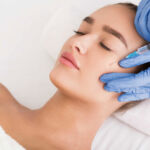
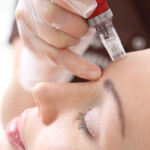
The most requested PRP treatment in Beverly Hills combines medical microneedling with your PRP. Microneedling creates thousands of controlled micro-channels in the skin, and PRP is applied during and after the treatment so it reaches the deeper layers. Patients choose it for:
- Dull, tired-looking skin and uneven texture
- Enlarged pores and early fine lines
- Shallow acne scarring and post-acne marks
- Pre-event skin quality (ideally started 2-3 months before the date)
Expect redness similar to a mild sunburn for 24-48 hours. Most people return to work the next day with mineral makeup. Learn how it compares with microneedling alone in PRP vs microneedling, and see real price ranges in our PRP facial cost guide.
2. Under-eye PRP
The skin under the eyes is among the thinnest on the body. When it thins further with age, it can look crepey, darker and more hollow. Under-eye PRP is placed with fine needles or a cannula to support skin thickness and quality. It is a good fit for people who want a softer, more rested look but are not candidates for tear trough filler, or who prefer to avoid filler near the eyes.
Under-eye PRP is gentle but gradual. It works best for mild crepiness and thin, slightly shadowed skin. Deep hollows with bone loss usually need structural support instead. Our team explains which option suits your anatomy in under-eye PRP vs tear trough filler and PRP for dark circles.
3. PRP for hair thinning (scalp PRP)
Scalp PRP is one of the best-studied aesthetic uses of platelet-rich plasma. Several clinical studies and meta-analyses have reported improvements in hair density and shaft thickness in people with androgenetic (pattern) hair thinning, especially when treatment starts early, while follicles are still active. PRP is injected into the thinning areas of the scalp after numbing.
Good candidates usually have:
- Early to moderate thinning at the part, crown or temples
- Diffuse shedding after a stressful period, illness or pregnancy (after medical causes are ruled out)
- A wish to support results alongside other therapies their physician recommends
PRP cannot regrow hair where follicles are fully gone (shiny, smooth bald skin). Thyroid issues, iron deficiency and some medications can cause shedding, so we may ask about recent blood work. More detail: does PRP work for hair loss?
4. PRP combined with other treatments
PRP pairs naturally with treatments that create a controlled healing response. Depending on your goals, your provider may suggest PRP alongside Morpheus8 RF microneedling, CO2 laser resurfacing or a biostimulator plan. Combining treatments is always planned around safe healing time, never stacked just to fill an appointment.
PRP vs PRF: which one is right for you?
PRF (platelet-rich fibrin) is prepared with a slower, gentler spin and no anticoagulant. It forms a soft fibrin matrix that releases growth factors more slowly and keeps more white cells. PRP is spun faster and stays liquid, which makes it ideal for microneedling and scalp work where it needs to spread easily.
| PRP | PRF | |
|---|---|---|
| Texture | Liquid | Gel-like as it sets |
| Best for | Microneedling, scalp, skin quality | Under-eyes, injectable skin support |
| Growth factor release | Faster | Slower, more sustained |
Neither is “better” in every case. Many patients use both for different areas. If you are leaning toward PRF, see our PRF treatment page and the full comparison in PRP vs PRF.
What happens during a PRP appointment
- Consultation and screening. We review your goals, photos, medical history and medications. Certain conditions mean PRP is not appropriate, and we will tell you if so.
- Numbing. Topical anesthetic is applied for 20-40 minutes for facial and under-eye treatments. Scalp treatments may use additional comfort measures.
- Blood draw. A small sample, similar to a routine lab test, is taken from your arm.
- Processing. The sample spins in a centrifuge for roughly 10-15 minutes to isolate the platelet-rich plasma.
- Treatment. PRP is applied with microneedling, injected with fine needles, or placed with a cannula, depending on the area.
- Aftercare. You leave with written aftercare and a direct line to our team.
To get ready, follow our step-by-step PRP preparation guide.
Recovery and aftercare
- Day 0-2: pinkness, mild swelling or tenderness. Small bruises are possible at injection points, especially under the eyes.
- First 24 hours: no makeup after microneedling, no strenuous workouts, saunas or hot yoga.
- First 3-7 days: gentle cleanser, bland moisturizer and daily SPF 30+. Skip retinoids, acids and scrubs.
- Anti-inflammatories: many providers advise avoiding NSAIDs such as ibuprofen for a few days before and after, unless your physician has prescribed them, since they may blunt the platelet response. Never stop a prescribed medication without speaking to your doctor.
- Scalp PRP: wait at least 24 hours before washing hair or using topical hair products, unless advised otherwise.
PRP results timeline
PRP works on biology’s schedule. Collagen remodeling takes weeks, and the hair growth cycle takes months, so patience is part of the plan.
- Week 1-2: a subtle fresh glow as the skin heals.
- Week 4-6: early improvement in texture and tone.
- Month 3: skin quality changes are usually clearest about 3 months after the first session.
- Month 4-6: hair density changes become measurable in responders.
We take standardized photos at each visit so you can see progress objectively. Full details: PRP results timeline.
How many PRP sessions will you need?
Most skin and under-eye plans begin with 3 sessions spaced 4-6 weeks apart. Scalp PRP commonly starts with 3-4 monthly sessions. After the initial series, maintenance once every 6-12 months helps hold results, because the natural aging process continues. The right number depends on your age, skin condition, hair status and lifestyle. Read how many PRP sessions you need for detailed protocols.
How much does PRP cost in Beverly Hills?
PRP pricing in Beverly Hills varies with the area treated, whether microneedling or another device is included, the preparation system used and the experience of the injector. As a general market guide in Los Angeles and Beverly Hills:
- PRP facial / PRP microneedling: commonly in the range of several hundred to around $1,500 per session
- Under-eye PRP: often priced per session, usually lower than a full-face treatment
- Scalp PRP for hair: commonly around $1,000-$2,000 per session in premium Beverly Hills clinics
- Packages: a 3-session series is usually discounted compared with single visits
These are market estimates, not a quote. Your exact price is confirmed in writing at consultation, and flexible monthly financing is available through Cherry payment plans. Be cautious with prices far below the market: proper medical screening, sterile single-use kits and a licensed injector all cost money.
Is PRP safe? Who should not get it?
Because PRP uses your own blood, allergic reactions to the material itself are very unlikely. Common side effects are temporary: redness, swelling, tenderness and bruising. As with any injection, infection is a rare risk, which is why strict sterile technique matters. Read more in Is PRP safe?
PRP may not be suitable if you have:
- A platelet disorder or blood-clotting disorder, or are taking blood thinners
- An active skin infection, cold sore outbreak or open wound in the area
- Active cancer or are undergoing chemotherapy
- Pregnancy or are breastfeeding
- Severe anemia or a systemic infection
The centrifuge systems used to prepare PRP are FDA-cleared devices, while many cosmetic applications of PRP are considered off-label. A responsible provider explains this openly, sets realistic expectations and documents your consent.
How to choose a PRP provider in Beverly Hills
Beverly Hills has no shortage of clinics offering PRP. The differences that matter are not visible on a menu:
- Medical oversight. Treatments should be performed by licensed professionals under physician supervision.
- The preparation system. Ask which kit and centrifuge protocol is used, and how the platelet concentration is achieved.
- Honest candidacy. A good provider tells you when PRP is not the best tool and suggests the right one.
- Clear pricing. You should know the full package price before you begin.
- Before and after documentation. Standardized photos, not filtered social posts. Read what our patients say in our patient reviews.
- Aftercare access. You should be able to reach the team if you have questions after treatment.
Why patients choose ELin Medical Spa for PRP
ELin Medical Spa is a modern aesthetic and wellness clinic at 337 S Beverly Dr #100, a short walk from Wilshire Boulevard and easily reached from Century City, West Hollywood, Bel Air, Brentwood and Beverly Grove. Our approach is simple: natural results, medical-grade standards and a plan designed for your face, not a template.
- Complimentary consultations with a personalized treatment plan
- Both PRP and PRF available, so you get the right preparation for each area
- Combination plans with Morpheus8, CO2 laser, Sculptra and injectables when appropriate
- Rated 5.0 on Google by our patients
- Financing options and transparent package pricing
Ready to see if PRP is right for you? Call or text +1 (424) 253-4516, message us on WhatsApp, or book your complimentary PRP consultation in Beverly Hills.
PRP Beverly Hills: frequently asked questions
Does PRP hurt?
Most patients describe it as mild discomfort. Topical numbing is used for the face and under-eyes, and the blood draw feels like a routine lab test. Scalp injections are the most noticeable, and we use comfort measures to keep them manageable.
How long do PRP results last?
Skin improvements commonly last about 12-18 months after a full series, and hair results need maintenance every 6-12 months. Sun protection, not smoking and good sleep all help results last longer.
Can I combine PRP with Botox or filler?
Yes. PRP improves skin quality, Botox relaxes expression lines and filler restores volume. They solve different problems and are often planned together, usually on separate days or in a specific order.
Is PRP good for men?
Yes. Scalp PRP for early thinning and PRP microneedling for texture and scarring are popular with men in Beverly Hills, and downtime is short enough to fit around work.
When will I see results from PRP?
Skin texture often starts to improve 4-6 weeks after the first session, with the clearest change around 3 months. Hair changes are typically assessed at 4-6 months.
Do you offer PRP for joints?
Our focus is aesthetic PRP for skin, under-eyes and hair. For orthopedic or joint concerns, we recommend speaking with a sports medicine or orthopedic physician.
This page is for general education and does not replace medical advice. Individual results vary. A consultation is required to confirm candidacy.
More treatments
Every plan starts with a complimentary consultation with our Beverly Hills team.


