












PDO threads have become one of the most popular non‑surgical treatments for lifting and rejuvenating the skin. But one of the most common questions patients ask is: What age should you start PDO threads? While there is no universal number, understanding how aging affects collagen production can help determine the ideal time to begin treatment. PDO threads are not only for mature individuals; they can also be an effective preventive option for younger patients experiencing early signs of skin laxity. This article explores the factors that influence the right age to start PDO threads and how to choose the best timing for long‑lasting, natural‑looking results.
Understanding How Age Affects Your Skin and Collagen
As we age, our skin naturally undergoes structural changes that affect firmness, elasticity, and overall appearance. Collagen and elastin, two essential proteins responsible for skin strength and resilience, begin to decline as early as our mid‑20s. Each year, the body produces less collagen, while environmental factors such as UV exposure, stress, lifestyle habits, and pollution accelerate this depletion. As a result, fine lines gradually form, and the skin loses its youthful ability to bounce back.
By the time we reach our 30s and 40s, early signs of sagging and volume loss become more noticeable, especially around the cheeks, jawline, and midface. Because collagen production slows progressively, the skin becomes thinner and less equipped to maintain support. This natural aging process is one of the key reasons many people start exploring non‑surgical solutions like PDO threads. Understanding how aging affects collagen can help you determine the most effective timing to begin preventive or corrective treatments to maintain a firm, youthful complexion.
What Are PDO Threads and How Do They Work?
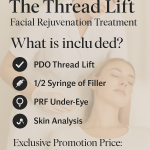
PDO (Polydioxanone) threads are medical‑grade, absorbable sutures used to lift, tighten, and rejuvenate the skin without surgery. Originally used in medical procedures for wound closure, PDO threads have gained popularity in aesthetic medicine for their ability to stimulate natural collagen production while providing structural support beneath the skin. The procedure involves inserting thin threads into targeted areas to lift sagging tissues and improve facial contours.
Once placed, the threads create an immediate lifting effect, while the body gradually absorbs them over several months. During this time, they trigger a controlled inflammatory response, encouraging the production of new collagen and elastin. This process enhances skin firmness, elasticity, and texture even after the threads dissolve. PDO threads are especially effective for the midface, cheeks, jawline, and lower face, making them a powerful option for addressing early to moderate skin laxity. Their minimally invasive nature and little downtime make PDO thread lifts a popular choice for those seeking a natural, youthful result without undergoing surgery.
Ideal Age Range to Start PDO Threads
- Late 20s: Ideal for early prevention of skin laxity and supporting collagen levels.
- Early 30s: Best time to address the first signs of sagging and fine lines.
- Mid to Late 30s: Effective for enhancing cheek definition and preventing deeper folds.
- Early 40s: Helps combat moderate collagen loss and maintain youthful facial contours.
- Late 40s and beyond: Works well when combined with other treatments for stronger lifting effects.
PDO Threads in Your 20s: Prevention and Skin Support
PDO threads in your 20s are most beneficial for prevention rather than correction. At this age, the skin still has high collagen levels, but early external factors, like sun exposure, stress, and poor lifestyle habits, may start weakening skin structure. Light PDO threads can be used to strengthen the skin, improve texture, and maintain firmness before noticeable sagging begins. This approach supports long‑term anti‑aging goals by boosting collagen production early on, helping preserve youthful contours. While full lifting threads are rarely needed in the 20s, smooth or mono threads are ideal for stimulating collagen and improving fine lines. Starting PDO threads at this age can delay the need for more aggressive treatments later and help maintain naturally radiant skin.
PDO Threads in Your 30s and 40s: Early Lifting and Collagen Boost
In your 30s and 40s, PDO threads become an effective solution for addressing the first visible signs of aging. Collagen production significantly decreases during these decades, leading to mild sagging, loss of cheek volume, and the development of nasolabial folds. PDO lifting threads provide both immediate and long‑term benefits by repositioning sagging tissues and stimulating collagen regeneration. This leads to improved facial contours, tighter skin, and a refreshed appearance. For individuals in their early 30s, lighter lifting may be sufficient, while those in their 40s may benefit from a combination of lifting and collagen‑stimulating threads for stronger results. PDO threads in this age range help delay deeper wrinkles and maintain a youthful midface without surgery.
Factors That Influence the Right Age for PDO Thread Lift
While many people ask what age is best to start PDO threads, the reality is that the ideal timing depends on several individual factors rather than a specific number. Skin quality is one of the most important considerations. People with good skin elasticity may delay treatment longer, while those experiencing early skin laxity might benefit from PDO threads sooner.
Genetics also play a significant role in how quickly the skin ages. Some individuals naturally maintain collagen levels longer, while others develop sagging or fine lines earlier. Lifestyle habits such as sun exposure, smoking, diet, stress, and sleep quality can also accelerate collagen loss and affect the condition of the skin.
Another important factor is the area being treated. For example, mild sagging in the cheeks or jawline during the early 30s may respond well to PDO threads, while more advanced laxity in later years might require a combination of treatments. Personal aesthetic goals also matter, some people seek preventive treatments, while others look for visible lifting effects. Ultimately, the right age for PDO thread treatment should be determined through consultation with an experienced practitioner who can assess skin condition, facial structure, and long‑term anti‑aging goals.
PDO Threads vs Other Anti‑Aging Treatments
| Treatment | Main Purpose | Invasiveness | Results Duration | Best For |
| PDO Thread Lift | Lifting sagging skin and stimulating collagen | Minimally invasive | 12-18 months | Mild to moderate skin laxity |
| Dermal Fillers | Restoring lost volume and contour | Minimally invasive | 6-18 months | Volume loss in cheeks or lips |
| Botox | Relaxing facial muscles to reduce wrinkles | Non‑surgical injection | 3-6 months | Dynamic wrinkles such as forehead lines |
| RF Skin Tightening | Tightening skin through heat‑based collagen stimulation | Non‑invasive | 6-12 months | Mild skin laxity and texture improvement |
| Surgical Facelift | Dramatic lifting and repositioning of facial tissues | Surgical | 5-10 years | Severe skin sagging |
Benefits of Starting PDO Threads Early
Starting PDO thread treatments at an earlier stage of aging can provide several long‑term advantages for maintaining youthful skin. One of the most important benefits is collagen stimulation. When PDO threads are placed under the skin, they trigger the body’s natural healing response, encouraging the production of new collagen fibers that strengthen and support the skin over time.
Beginning treatment before significant sagging occurs can also help maintain facial structure and delay more advanced signs of aging. Instead of correcting deep wrinkles or severe skin laxity later in life, early PDO thread treatments work as a preventive approach that preserves skin firmness and elasticity.
Another advantage is that younger skin typically responds better to collagen‑stimulating procedures. This means results can appear more natural and last longer when PDO threads are used proactively. Early treatments often require fewer threads and produce subtle improvements that maintain a refreshed and balanced facial appearance.In addition, starting PDO threads early may reduce the need for more invasive procedures in the future. By maintaining collagen levels and supporting facial tissues, individuals can enjoy gradual, natural rejuvenation over time without drastic interventions.
What to Expect Before and After PDO Thread Treatment
Before undergoing a PDO thread lift, patients usually attend a consultation with an aesthetic practitioner to evaluate their skin condition, facial structure, and treatment goals. During this consultation, the provider determines the number and type of threads needed and explains the expected results. Patients may be advised to avoid blood‑thinning medications, alcohol, or certain supplements for several days prior to the procedure to reduce the risk of bruising.
The procedure itself is relatively quick and typically takes between 30 and 60 minutes. A local anesthetic is applied to ensure comfort while the threads are carefully inserted beneath the skin using fine needles or cannulas. Once placed, the threads gently lift the skin and provide structural support.
After the treatment, mild swelling, bruising, or tenderness may occur for a few days. Most patients can return to normal activities within 24 to 48 hours, although intense exercise and facial pressure should be avoided temporarily. Over the following weeks, collagen production gradually increases, enhancing skin firmness and improving the overall lifting effect.
Early Results You Can Expect After PDO Thread Lift
One of the appealing aspects of PDO thread treatment is that patients can notice visible improvements shortly after the procedure. Immediately after the threads are placed, the skin often appears slightly lifted and tighter due to the mechanical support created by the threads. This initial lifting effect can enhance facial contours, particularly in areas such as the cheeks, jawline, and midface. However, the first few days after treatment may include mild swelling, bruising, or slight tightness in the treated areas. These temporary effects usually resolve within a week as the skin begins to adjust. Once the swelling subsides, the lifting effect becomes more natural and balanced.
Although early improvements are noticeable, the results continue to develop over time. The body’s natural healing response stimulates collagen production around the threads, gradually improving skin firmness and texture. Because of this process, the skin may appear smoother and more rejuvenated within several weeks after treatment.
Long‑Term Skin Improvement and Collagen Boost
The long‑term benefits of PDO threads go beyond the immediate lifting effect. As the threads remain under the skin, they stimulate the body’s natural collagen production, which is essential for maintaining skin strength, elasticity, and youthful texture. This process, known as neocollagenesis, gradually strengthens the skin’s structural support.
Over the course of several months, newly produced collagen fibers form around the threads, helping the skin become firmer and more resilient. Even after the PDO threads naturally dissolve, typically within six to eight months, the collagen network they helped create continues to support the skin.
This ongoing collagen stimulation leads to smoother skin, improved elasticity, and more defined facial contours. Many patients notice that their skin looks healthier and more youthful long after the threads are absorbed. With proper skincare and occasional maintenance treatments, the benefits of PDO threads can last well beyond a year while promoting gradual, natural‑looking rejuvenation.
Read more: PDO Threads Lift
Safety Considerations and Who Should Avoid PDO Threads
PDO thread lifts are generally considered safe when performed by a trained and experienced medical professional. The threads are made of polydioxanone, a biocompatible material that has been used in surgical sutures for many years. Because the body gradually absorbs the threads over time, the risk of long‑term complications is relatively low.
However, safety depends greatly on proper technique, patient selection, and aftercare. Choosing a qualified practitioner is essential to minimize potential risks such as infection, thread migration, or asymmetry. Patients should carefully follow post‑treatment instructions, including avoiding excessive facial movement, heavy exercise, or pressure on the treated area during the initial recovery period.
Although PDO threads are suitable for many individuals, they may not be recommended for everyone. People with active skin infections, certain autoimmune conditions, or severe skin laxity may not be ideal candidates. Pregnant or breastfeeding individuals are also usually advised to postpone cosmetic procedures. A thorough consultation helps determine whether PDO thread treatment is appropriate and ensures that the procedure is performed safely while achieving natural‑looking results.
FAQ
1. What is the best age to start PDO threads?
Most people begin PDO threads in their late 20s to early 40s, depending on skin quality and early signs of laxity. There’s no fixed age: your skin condition is the real indicator.
2. Are PDO threads better for prevention or correction?
Both. In the 20s, they work as prevention by supporting collagen. In the 30s and 40s, they provide visible lifting and tightening.
3. How long do PDO thread results last?
Results typically last 12 to 18 months, depending on the type of thread, your skin quality, and lifestyle.
4. Is the PDO thread lift painful?
Most patients feel minimal discomfort. Local anesthesia is used to numb the area, making the procedure very tolerable.
5. How soon can I return to work after PDO threads?
You can often return to daily activities within 24-48 hours, but intense exercise should be avoided for about one week.
6. Can PDO threads help with deep wrinkles?
PDO threads lift and tighten, but deep wrinkles may require combination treatments like fillers, Botox, or skin boosters.
7. Is there downtime after the procedure?
Mild swelling, tenderness, and bruising are common and usually resolve within a few days.
8. Are PDO threads safe for everyone?
They are safe for most people, but not recommended for pregnant or breastfeeding individuals, those with active infections, or certain autoimmune conditions.
9. How many threads do I need for a full treatment?
The number varies based on skin laxity, but most patients need 4-12 threads for the face.
10. Can PDO threads be combined with other treatments?
Yes, combining PDO threads with treatments like fillers, PRP, or RF tightening can enhance results and improve overall facial rejuvenation.
Conclusion: When Is the Right Time to Start PDO Threads?
Choosing the right age to start PDO threads is not about hitting a specific number, it’s about understanding your skin, your collagen levels, and your long‑term aesthetic goals. Whether you are in your late 20s and looking for preventive support, or in your 30s and 40s addressing early sagging and volume loss, PDO threads offer a customizable and minimally invasive solution. Starting treatment at the right time can help maintain facial structure, boost collagen, and delay deeper signs of aging.
If you’re unsure whether PDO threads are right for you, the best next step is to book a personalized consultation. A qualified practitioner can assess your skin, recommend the most effective approach, and help you achieve natural, long‑lasting rejuvenation.
Take the first step toward firmer, youthful skin, schedule your PDO thread evaluation today.